In recent days, the DC Rivals HyperCoaster at Warner Bros. Movie World has become the subject of a flurry of sensationalist headlines. Outlets reported "riders stranded" and "visitors hanging in the air," painting a picture of a harrowing "theme park horror."
As is often the case with modern thrill rides and coasters, the reality was far less dramatic and far more controlled. Here is a factual breakdown of what actually occurred and why the sensationalist narrative is not only wrong, but a misunderstanding of how roller coasters keep you safe.
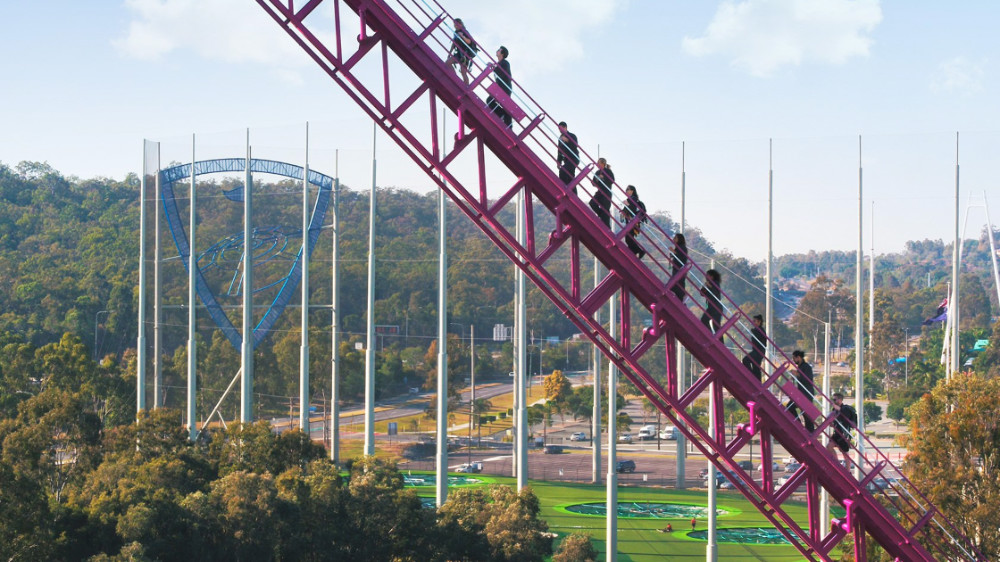
What Actually Happened?
On Wednesday, April 8, the DC Rivals HyperCoaster at Warner Bros. Movie World experienced a standard ride stoppage. The ride’s computer system received a signal from a sensor that fell outside of normal operating parameters.
Following the strict safety protocols designed by the coaster manufacturer (Mack Rides), the system did exactly what it was programmed to do: it brought the train to a halt in a safe stop zone.
| The Headline | The Reality |
|---|---|
| "Left Hanging" | The train stopped on the lift hill (the initial climb). On a lift hill, the train is secured by a mechanical anti-rollback system. Riders were seated upright, not "hanging." |
| "Stranded at 33ft" | Riders were in a designated safe stop zone equipped with catwalks specifically built for staff access and guest evacuation. |
| "Horror/Agonising Rescue" | This was a controlled evacuation. Staff followed standard training to escort guests down. Providing umbrellas for shade was a comfort protocol, not an emergency measure. |
The Role of Sensor Activations
Modern coasters are essentially giant, gravity-driven computers. They are outfitted with hundreds of sensors that monitor everything from train speed to the position of the "dogs" on the lift chain.
A "sensor activation" can be triggered by something as minor as:
- A sensor detecting a slight variation in timing.
- Debris (like a loose hat or scarf) passing a sensor.
- A momentary communication glitch between the ride's PLCs (Programmable Logic Controllers).
When this happens, the ride "fails safe". This simply means it defaults to a stopped state until a manual inspection can be performed. To the public, a stopped ride looks like a failure; to engineers, a stopped ride is proof that the safety system is working.
Why Sensationalism Hurts the Industry
By using words like "horror" and "trapped," mainstream media outlets create unnecessary fear. When a lift hill stops, it is the mechanical equivalent of a red light on a road. You aren't "trapped" at a red light; you are waiting for the system to ensure it is safe to proceed.
"Ride stoppages are proof that ride systems and operators are doing exactly what they are designed and trained to do to keep our guests safe."
— Village Roadshow Theme Parks
Our Verdict
The guests on DC Rivals HyperCoaster were never in any danger. They experienced the result of a multi-million dollar safety system that prioritises caution over convenience. While walking down the lift hill isn't the experience that they paid for, it is a testament to the rigorous safety standards maintained at theme parks.
It's worth noting that that Warner Bros Movie World also offers a DC Rivals HyperCoaster Lift Climb, where visitors can climb the 282 stairs to the top as a paid-for experience, so having guests on the lift hill is not even an unusual occurence.